When it comes to indoor cycling, achieving the correct ergonomic posture is crucial. "How to adjust an exercise bike for the correct ergonomic posture?" is a common question among fitness enthusiasts. According to Dr. Jane Smith, a noted expert in biomechanics, "A properly adjusted bike can prevent injuries and improve performance."
To ride comfortably and effectively, adjustments are key. The seat height, saddle position, and handlebar height significantly impact your posture. If the seat is too high or low, it can lead to strain on your knees. On the other hand, if the handlebars are too far or too close, it may cause back discomfort.
Many cyclists underestimate the importance of these adjustments. Taking the time to find the right settings may seem tedious but is essential for long-term benefits. As Dr. Smith emphasizes, "Small changes can result in significant improvements." Ensuring your setup aligns with your body’s natural mechanics is vital in promoting a joyful and injury-free cycling experience.
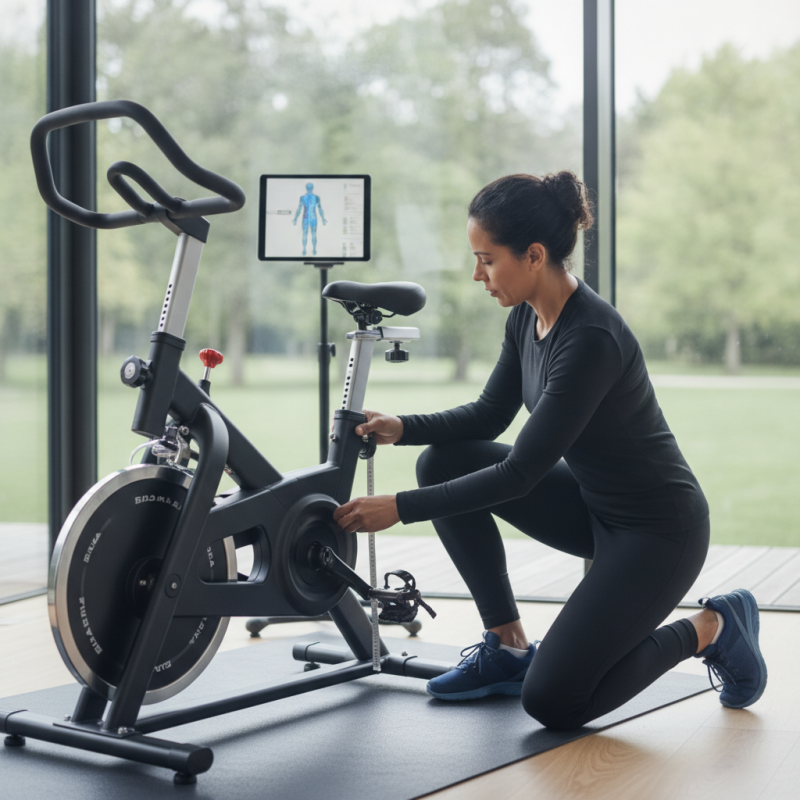
Understanding the right ergonomic setup for your exercise bike is crucial. Proper adjustments can significantly enhance your comfort and performance. Start by adjusting the seat height. Your legs should have a slight bend at the knees when the pedal is at its lowest point. This prevents strain and ensures a smooth pedal stroke. Many people overlook this detail, resulting in discomfort during long rides.
Next, focus on the seat position. The seat should be positioned so that, when the pedals are level, your kneecap aligns with the pedal axle. If your knee is too far forward or back, it might lead to injury over time. Don't hesitate to make several adjustments until you find the right spot. Remember, small changes can make a big difference in your ride quality.
Lastly, handlebar height is often neglected. If the handlebars are too low, it can strain your back and neck. Ideally, they should be at or slightly above the seat level. This position allows for a more natural posture. Pay attention to how your body feels during and after your workouts. If something seems off, it's worth reevaluating your setup. Listen to your body; refinement is a continual process.
| Adjustment Aspect | Recommended Measurement | Importance |
|---|---|---|
| Saddle Height | Ensure a slight bend in the knee when the pedal is at the lowest point | Prevents knee strain |
| Saddle Position (Fore/Aft) | Knees should be above pedals when at 3 o'clock position | Improves pedal efficiency |
| Handlebar Height | Should be level with or slightly higher than saddle | Enhances comfort and reduces back strain |
| Handlebar Reach | Elbows slightly bent when hands are on the handlebars | Maintains proper posture |
| Pedal Straps | Adjust snugly without cutting off circulation | Prevents foot slip during workout |
: Stand straight, measure from your crotch to the floor. This helps set the seat height.
Your knee should have a slight bend at the lowest pedal point.
Your elbows should be slightly bent when gripping the handlebars.
Adjust your seat or handlebars. Comfort is crucial for an effective workout.
Ensure your feet are flat and comfortable. No discomfort in arches or ankles is ideal.
Yes, it often takes several tries to find the perfect bike fit for your body.
This could mean your seat height is off. Reassess and adjust as needed.
Regularly check your fit, especially if your riding style changes or your body does.
Your body gives signals about comfort and efficiency. Ignoring them can lead to strain.
Yes, your body or riding style may change. Adjustments will help maintain comfort.
Adjusting your exercise bike for the correct ergonomic posture is essential for comfort and performance during workouts. Understanding the fundamentals of ergonomics in exercise bike setup involves measuring your body dimensions to achieve optimal bike adjustments. Start by adjusting the seat height to ensure that your legs can extend fully without strain while pedaling. The handlebars should also be aligned properly, allowing for a neutral wrist position and encouraging good posture.
Furthermore, fine-tuning the resistance and pedal position enhances cycling efficiency. This comprehensive approach not only minimizes the risk of injury but also maximizes workout effectiveness. By carefully following these guidelines, you can enjoy a more comfortable and productive biking experience that caters to your unique body mechanics.

 Naturist Fitness